The mudroom build-out, ranked
The four essentials — hooks, bench, boot tray, key tray — total $95–185 with no renovation. Add per-person cubbies and the full build-out is $145–305. In order of impact:
Disclosure: As an Amazon Associate, we earn from qualifying purchases. We may earn a commission when you buy through our partner links. It doesn't affect our recommendations or what you pay. Prices and availability change frequently; editorial ranges are planning estimates, not live quotes. Check the retailer for current prices, pack sizes, and availability. Learn more
Useful additions for your space
Shop by problem
Use the best-for notes to find a relevant option. Check dimensions and compatibility before buying.
Wall-Mounted Coat Rack with Shelf (mDesign, SONGMICS)
A 30–36 in rail with 4–5 hooks and a shelf above — mount the rail at 60 in for adults, and screw into studs, not drywall anchors. Best for: Coats, jackets, hats, bags — one hook per person minimum.
Open-Shelf Shoe Bench (SONGMICS, Whitmor)
About 30 in wide and 17–19 in to the seat, with two or three open shelves below for 6–12 pairs. Best for: Everyday shoes, boots, kids' shoes.
Cube Organizer as Cubbies (ClosetMaid Cubeicals)
Openings run about 11 in square and take a 10.5 in fabric bin; a 6-cube unit on its side is roughly 24 in tall by 36 in wide — three people, one column each. Best for: Backpacks, lunchboxes, sports gear.
Key and Mail Organizer (mDesign)
Wall-mounted rack with hooks for keys and slots for mail — mount it at 48–54 in, within arm's reach of the door you actually use. Best for: Keys, mail, sunglasses, wallets.
Boot Tray (2-Pack)
Molded tray about 30 x 15 in with a raised lip — it holds the meltwater instead of your floor, and one sits exactly under a 30 in bench. Best for: Wet and muddy shoes, rain boots.
Over-Door Hooks (Command, mDesign)
No-drill hooks for renters; hangs a loaded bag without testing an adhesive hook's rating, and leaves nothing behind. Best for: Overflow coats, umbrellas, reusable bags.
1. The Drop Zone Concept
A drop zone is one designated spot where everything you carry in and out of the house lands. It works because it removes a decision at the exact moment nobody wants to make one — arms full, coming through the door. Five parts, all of them within 6 feet of one door, and the location matters more than any of the hardware:
- Location (the only free decision): The door nearest your car, not the front door. If the drop zone is more than about 6 feet from where you actually walk in, things get set down before they reach it — that's the whole failure mode.
- Bench, 30 in wide and 17–19 in to the seat: Standard chair height, deep enough at 14–16 in to sit properly. Nobody balances on a 24 in cube unit to pull off a boot, which is why the cubbies don't replace this.
- Hooks at two heights: 60 in for adults, a second rail at 36–42 in for kids, spaced 8–10 in apart so a parka and a backpack don't fight. One hook per person, minimum.
- A tray about 6 x 9 in: Keys, wallet, sunglasses, AirPods. Small on purpose — a big bowl becomes a junk drawer inside a month.
- Shoe storage capped at 2–3 pairs per person: A 30 x 15 in boot tray under the bench for the wet ones, shelves for the rest. Everything past the cap goes back to the closet.
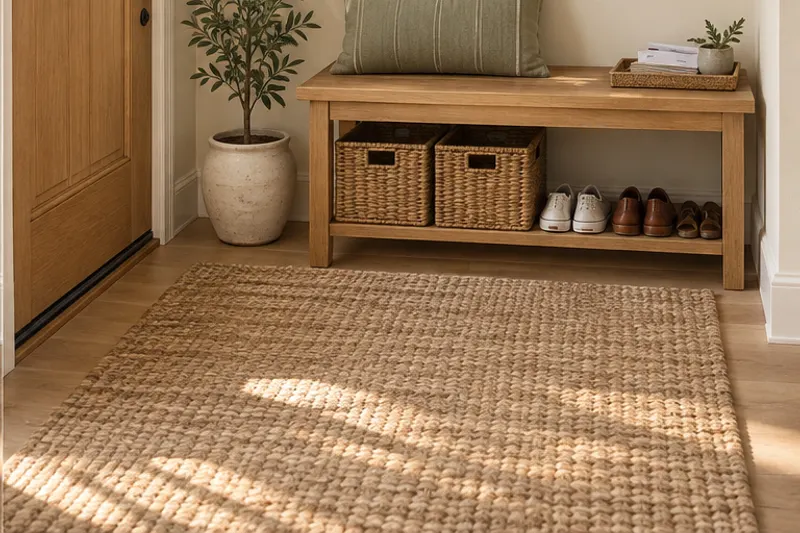
2. Shoe Storage Solutions
Shoes are the number-one entryway clutter culprit, and the fix is a hard cap plus a place to sit: 2–3 pairs per person at the door, everything else back to the closet. A bench is what makes the cap stick — people take shoes off where they can sit down.
- Open-shelf shoe bench ($40–80): Sit on top, 6–12 pairs on the shelves below. SONGMICS and Whitmor both make them at this price. An upholstered lift-top storage bench runs $100–200 and hides shoes better, but nobody lifts the lid on the way out the door.
- Boot tray ($15–25): Roughly 30 x 15 inches with a raised lip, so meltwater stays in the tray. Hose it off in spring.
- Vertical shoe rack: Stores 10+ pairs in a narrow footprint — the move when you have wall but no floor.
- Basket per person: Each family member tosses shoes in their own basket. Lower standards, zero arguments.
- Limit rule: 2–3 pairs per person at the door. Without it, no amount of storage keeps up.
Pro tip: Place a boot tray even in dry climates. It visually signals "shoes go here" and keeps the entryway tidy year-round.
3. Coat & Bag Storage
Wall hooks beat a coat closet for daily-use items, because a coat on a hook gets worn and a coat on a hanger behind a door doesn't. Budget $25–50for a rack or hook rail, and mount it into studs — a loaded winter coat plus a wet backpack is heavier than any drywall anchor is happy about.
- Screwed rail vs. adhesive: Command's large hook is rated 5 lb and the jumbo 7.5 lb (3M also makes a 15 lb X-Large) — fine for a fleece or a tote, but those are static ratings on a clean, cured surface, and a yanked parka is a dynamic load. Renters who can't drill should use over-door hooks instead of stacking adhesive hooks past their rating.
- Two rails, two heights: 60 in off the floor for adults, a second rail at 36–42 in for kids — the height a 5-to-10-year-old can reach without a stretch. One rail at 60 in and the coats end up on the floor.
- Space hooks 8–10 in apart: Closer than that and a winter parka covers its neighbour, which is the same as not having the hook. A 30–36 in rail therefore carries 4–5 hooks, not 8.
- One coat per hook: If it's buried, it won't get worn — rotate the off-season half out twice a year.
- Bag hooks: Dedicate one hook per person for backpacks, gym bags, or purses. A loaded school backpack runs 10–20 lb, which is why this one wants a stud behind it.
- Umbrella stand: A narrow stand, roughly 8–10 in across, or a wall-mounted holder within arm's reach of the door.
4. Keys, Mail & Daily Essentials
Keys get lost because they have no home, and the home has to be within arm's reach of the door you actually use — a bowl in the kitchen is already too far. A wall-mounted key and mail rack is $15–30, mounts at 48–54 in (chest height, so you drop keys without looking), and solves the single most common morning delay in the house.
- Key hooks, 48–54 in, inside 2 feet of the door: One hook per set, labeled. If you have to turn around or take a step to reach it, it doesn't get used.
- A 6 x 9 in catch-all tray: Wallet, sunglasses, AirPods, badge. Deliberately too small to hold a week of mail — that's the point.
- Two mail slots, not one: One for anything needing action inside 7 days, one for filing. Empty the action slot every evening; a single undivided slot is just a pile standing up.
- Outgoing bin on the floor by the door: Returns, packages to mail, library books, the dry cleaning. A bin you have to step over is a bin that gets emptied.
- Charging shelf with a 4-port strip: Phones and smartwatches charge here, not on nightstands. Keep the shelf 12 in clear of the coat rail so a wet sleeve never drips on it.
5. Family Cubby Systems
For families, individual cubbies end the "whose stuff is this?" problem by making ownership visible. You don't need built-in lockers: a 4- or 6-cube organizer (ClosetMaid Cubeicals and similar, $50–120) laid on its side gives each person a bin, a shelf above, and a hook on the end panel. Openings run about 11 in square and take a standard 10.5 in fabric bin; a 6-cube unit on its side is roughly 24 in tall by 36 in wide, which is one column each for three people in the same 3 feet of wall the whole mudroom needs. At 24 in it's a shelf, not a seat — keep the 17–19 in bench for actually putting shoes on.
Per-Person Setup
One hook, one shelf, one 10.5 in bin each — 4 cubes for a family of four, 6 if two people carry sports gear
Label Everything
Names on the bins; photo labels instead for anyone under about 6, and re-label at the start of each school year
- Shelf above, around 48 in: Hats, gloves, sunscreen — whichever season is current. One open bin per person here, no lids; lids get skipped.
- Hook on the end panel, 36–42 in for kids: The coat currently in rotation, one per hook. Everything else is off-season and belongs elsewhere.
- The 10.5 in bin at cubby level: Backpack, lunchbox, water bottle, cleats. When the bin won't close, that's the signal to clear it out — not the signal to buy a bigger bin.
- Floor, under the cubbies: Shoes on a 30 x 15 in tray, 2–3 pairs per person. The tray is what keeps grit off the floor when 24 in of unit is sitting above it.
6. No Mudroom? Create One
You don't need a dedicated room — you need about 3 feet of wall, roughly the width of a doorway. Everything stacks vertically inside that 36 inches of width: a 30-inch bench on the floor with a boot tray beneath it, a 30–36 inch hook rail above at 60 inches off the floor, a second rail at 36–42 inches if kids hang their own coats, and a shelf at about 72 inches for the things nobody touches daily. Three feet is the width; 60 inches is a height on that same wall. Anything wider is comfort, not capacity.
- Entryway wall (36 in wide, 4 screws): Bench, tray, rail at 60 in, shelf at 72 in. That is a complete mudroom for $95–185, and it goes up in an afternoon.
- Closet conversion: Pull the door off a coat closet near the entry — a standard one is 24–30 in deep, enough for a bench inside the opening — then add a rail, two shelves, and a battery puck light.
- Garage entry: Mount the rail on the garage side of the house door, at least 3 ft clear of the car door swing. Wet boots stay on concrete, which is what concrete is for.
- Furniture hack for renters: A console table 30–36 in wide, a mirror with 3–4 integrated hooks, and one basket underneath. Over-door hooks instead of a rail if you can't drill — the common Command hooks are rated 5 lb (large) and 7.5 lb (jumbo), with a 15 lb X-Large at the top of the line.
- Runner rug, about 2 x 6 ft: Washable, and it defines the zone in an open floor plan. Buy the one that goes in a home machine; the one that needs professional cleaning gets left dirty.
7. Seasonal Rotation
A mudroom fails in November, not in July. In summer each person arrives with two things — a light jacket and sneakers. In winter it's five: parka, hat, gloves, scarf, boots, and all of it comes in wet. The same rail that was fine in June is now holding two and a half times as many items per person. The fix is a capacity rule, not more hooks: one hook per person holds the current coat only, and everything else moves out twice a year.
- Two swaps a year, not four: Late October and early April. Anything more frequent gets skipped, and the mudroom quietly becomes year-round storage.
- The rule that does the work: One coat per hook, 2–3 pairs of shoes per person at the door. If the current season won't fit inside that, the off-season half is still there — move it, don't buy another rack.
- Where off-season gear goes: Bedroom closet top shelf for coats you'll want back in six months; a labeled bin in the garage or a conditioned attic for bulk. Never an unconditioned attic for leather boots or down — that space clears 85°F for months.
- Dry before you store: Boots and gloves put away damp in April come out mildewed in October. Two days out of the bin, then pack.
- Swap the small stuff too: Ice scraper and glove bin out in April; sunscreen, water bottles, and a beach-bag hook in. The top shelf of the cubby is the natural home for whichever set is current — see the seasonal storage guide for the full rotation.
Browse the storage options above once you know what your space needs.
Doing the whole house?The free 12-week planner takes one room a week, with a printable checklist for each. Get the planner. No email required.
Mudroom Storage FAQ
How do I create a mudroom if I don't have one?+
You need about 3 feet of wall — the width of a standard doorway — not a dedicated room. Into that 36 inches of width go a 30-inch bench (17–19 inches to the seat), a boot tray underneath, a 30–36 inch hook rail mounted at 60 inches for adults, and a shelf above at about 72 inches. Add a second rail at 36–42 inches if kids hang their own coats. The whole thing is $95–185 and needs four screws into studs. A washable runner, about 2 x 6 feet, visually defines the zone in an open floor plan.
How much does it cost to set up a mudroom?+
$95–185 covers the four essentials with no renovation: a coat rack or hook rail ($25–50), an open-shelf shoe bench ($40–80), a boot tray ($15–25), and a key and mail organizer ($15–30). Add a cube unit for per-person cubbies ($50–120) and the full build-out lands at $145–305. Built-in millwork with lockers and bench seating is a different category entirely — that's a contractor quote, usually into the thousands.
How do I organize a mudroom for a family with kids?+
Give each person one hook, one bin, and one shelf, and put the kids' hooks at 36–42 inches so they can hang a coat without help — adult hooks go at 60 inches on a separate rail. A 6-cube organizer ($50–120) laid on its side is roughly 24 inches tall by 36 inches wide, with 11-inch openings that take a 10.5-inch fabric bin: three people, one column each. Use photo labels below reading age. Cap footwear at 2–3 pairs per person at the door — no amount of storage keeps up past that.
What is the best flooring for a mudroom?+
Porcelain tile, luxury vinyl plank, or sealed concrete, because all three shrug off standing water and grit. If you go with LVP, look for a wear layer of 12 mil or more — the 6-mil budget planks scuff through in a high-traffic entry. Avoid carpet and hardwood: hardwood cups and stains where boots drip. Over the hard floor, a washable runner about 2 x 6 feet catches most of the grit, and a 30 x 15 inch boot tray catches the meltwater the rug won't.
See our best storage bins
Shoe storage, coat organization, and entryway bins — compared and ranked.
See Top Picks