From sorting to system upgrades
Shop by problem
Find options for every part of the guide. Start with the problem you want to solve, then compare sizes and fit before buying.
Disclosure: As an Amazon Associate, we earn from qualifying purchases. We may earn a commission when you buy through our partner links. It doesn't affect our recommendations or what you pay. Prices and availability change frequently; editorial ranges are planning estimates, not live quotes. Check the retailer for current prices, pack sizes, and availability. Learn more
Sort & declutter
Read adviceStart with bags or boxes you already own for keep, donate, and repair piles.
Group similar items
Read adviceGive each category a home. Check shelf depth and basket dimensions before choosing.
Hanging space
Read adviceChoose slim hangers for a crowded rail, or a second rod if there is clearance below shorter clothes.
Shelves & folded clothes
Read adviceKeep existing stacks upright with dividers, or add hanging shelves where shelf space is missing.
Shoe storage
Read adviceKeep everyday pairs accessible. Match door pockets, racks, or boxes to the size and shape of your shoes.
Drawers & accessories
Read adviceDivide drawers for small items, use trays for jewelry, and hang belts or scarves where you can see them.
Small & seasonal storage
Read adviceMove less-used items out of prime space. Measure under-bed clearance and allow room to retrieve containers.
A different closet layout
Read adviceIf small changes are not enough, compare complete systems by fit, installation, and budget.
Closet fixes at a glance
Most closets need one of the first six fixes, each $35 or less. A system or built-in is for a layout no organizer can fix. Product names open Amazon search results, and the bigger fixes open our comparison and cost guide.
1. Declutter your closet first
Start with one shelf or rail. Separate what you use from items that need a decision. Use these criteria to decide what stays:
- Does it fit? - If not, donate or tailor it
- Have you worn it in the past year? - If no, consider whether you still need it
- Is it damaged? - Repair or replace
- Does it match your current style? - Keep only what you love
- Do you have duplicates? - Keep the best one
A simple way to see what you wear. Turn all your hangers backwards. After wearing something, hang it normally. Review the untouched items after a season, allowing for special occasions, changing needs, and seasonal clothes.
2. Organize by category
Group similar items together so you can see everything you own in each category:
Hanging clothes
Shirts, blouses, dresses, pants, and jackets
Folded clothes
Sweaters, T-shirts, jeans, and activewear
Accessories
Belts, scarves, hats, and bags
Shoes
Everyday, dress, athletic, and seasonal shoes
3. Make more of your hanging space
If there is unused room below shorter clothes, a second hanging level may help. Leave enough clearance for the garments and check the rod’s load limit.
Add a second hanging level
Add a second rod below for shirts, skirts, and folded pants. Standard heights:
- Upper rod: 80-84 inches from floor
- Lower rod: 40-42 inches from floor
- Single rod (for dresses): 66-72 inches from floor
Choose consistent hangers
Switching to uniform hangers instantly makes your closet look organized:
- Velvet hangers: Slim, non-slip, space-saving (best for most closets)
- Wood hangers: Best for suits and heavy coats
- Plastic tubular: Budget option, but takes more space
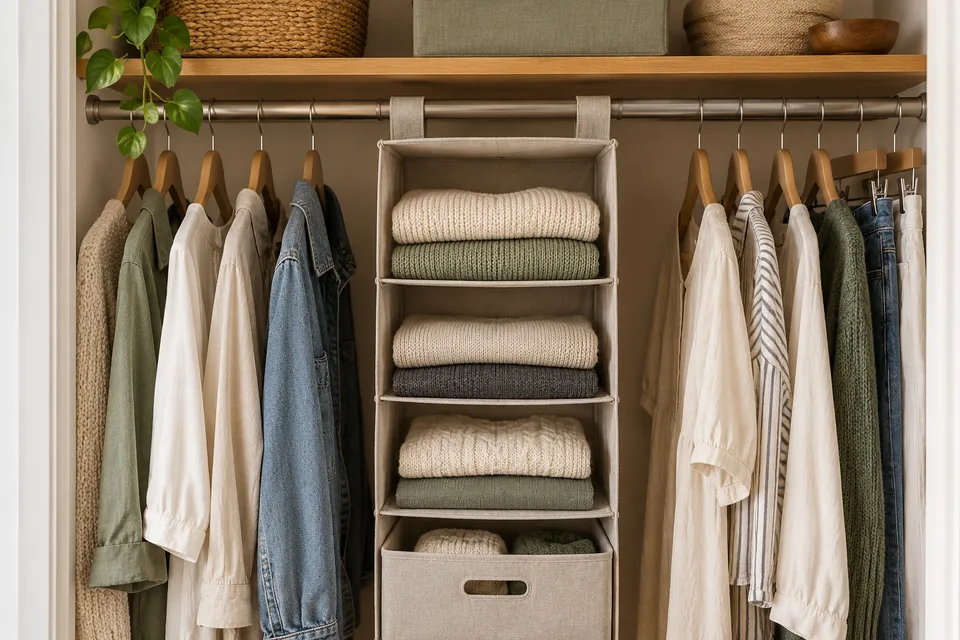
4. Organize your shelves
Shelves are perfect for folded items, but they can quickly become messy. Use these tools:
- Shelf dividers: Keep stacks of sweaters from toppling
- Fabric bins: Corral small items and hide clutter
- Clear containers: See contents at a glance
- Drawer units: Add drawers to open shelving
5. Find a home for your shoes
Keep everyday pairs easy to reach, and choose storage that fits the shoes you actually own:
- Floor shoe racks: Best for everyday shoes you wear often
- Over-door organizers: Great for flats and sandals
- Clear shoe boxes: Protect and display nice shoes
- Hanging shoe organizers: Maximize vertical space
- Under-bed storage: Perfect for off-season shoes
6. Drawers, accessories & jewelry
Small items need dedicated storage to prevent tangling and loss:
- Belt hangers: Circular or pull-out styles
- Tie racks: Motorized or stationary
- Scarf hangers: Multi-loop designs
- Jewelry trays: Velvet-lined drawer inserts
- Hooks: For bags and hats on closet walls
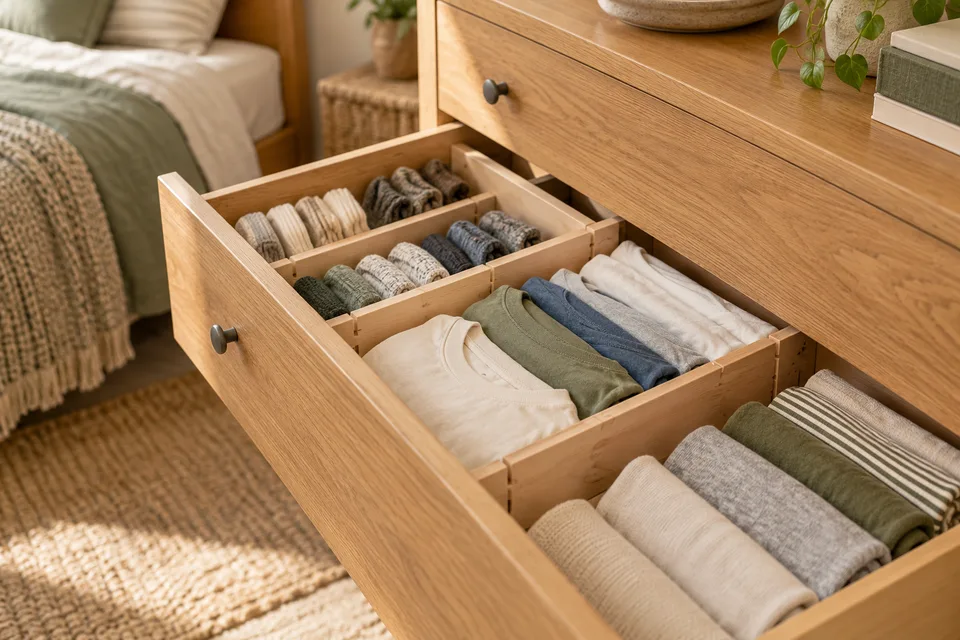
Give drawers simple sections
Measure the inside width, depth, and height before choosing dividers. Group socks, underwear, and small accessories separately, leaving enough room to see and lift out each item. Adjustable dividers should fit securely without forcing the drawer sides apart.
7. Make a small closet work
Limited space requires creative solutions:
- Use the door: Over-door organizers for shoes, accessories, or cleaning supplies
- Go vertical: Use reachable upper shelves for lighter, less-used items
- Slim hangers: Slim profiles can reduce crowding compared with bulky hangers
- Seasonal rotation: Store off-season clothes elsewhere
- Prioritize everyday items: Keep the clothes you reach for most in the easiest-to-access spaces
8. When to upgrade your closet system
Consider a new system when sorting and small organizers still leave you without the hanging space, shelves, or access you need. Measure the closet, note doors and obstructions, and list what your current layout cannot accommodate.
Compare closet systems
Compare layouts, planning budgets, installation, and tradeoffs before replacing your existing setup.
Explore closet systemsDoing the whole house?The free 12-week planner takes one room a week, with a printable checklist for each. Get the planner. No email required.
Closet organization FAQs
What's the fastest way to organize a small closet?+
Start with one shelf or rail. Sort what you use, group similar items, and place everyday clothes within reach. Only add an organizer once you know which problem remains.
What is the best closet organization system?+
The right system depends on your measurements, belongings, installation requirements, and budget. Try small changes first. If the layout still falls short, use our closet systems buying guide to compare modular, wire, and custom options.
How do I organize shoes in a closet?+
Keep everyday shoes easy to reach on a low shelf or rack. Door pockets can suit lighter shoes if the door closes comfortably. Store less-used pairs separately, choosing containers that fit their shape and let you identify the contents.
How much does it cost to organize a closet?+
Sorting and rearranging existing storage can cost nothing. This guide's planning ranges include $18-30 for a 50-pack of hangers and $15-30 for adjustable drawer dividers. Prices and pack sizes vary; check the retailer before buying. Larger system upgrades are covered in our buying guide.
Can I make more closet space without remodeling?+
You may be able to use existing space more effectively with another hanging level, shelf dividers, or door storage. Measure clearances, keep longer garments unobstructed, and follow each organizer's mounting and load instructions. The improvement depends on your current layout.