Basement Organization
Basement organization from one photo.
Upload a photo of your basement. Get a storage plan that keeps everything off the floor and dry, with product picks and a preview of the space organized. Free.
Choose a photo that shows the area you want to organize. Include the shelves, furniture, and belongings you want help with.
Photos are analyzed and not stored. By uploading, you agree to our Terms of Service and Privacy Policy. Upload only photos you own; no illegal, explicit, or private content of other people.
What the photo usually shows
Common basement organization problems we solve
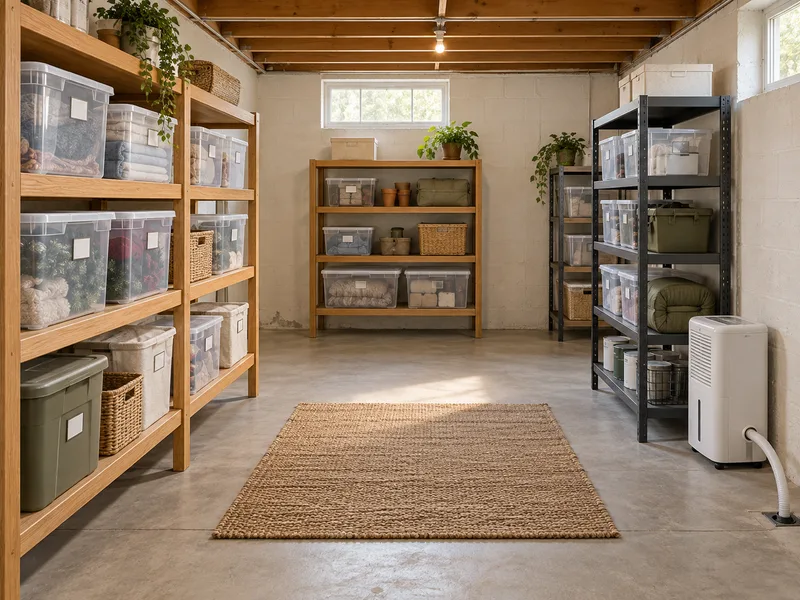
Basement organization is a moisture problem before it is a storage problem. The space is big, the floor is concrete, and the humidity sits higher than it feels, so whatever touches the slab or lives in cardboard is the first thing to go. Upload a photo and we read your specific basement, finished or unfinished, utilities in the frame or not. You get a plan that puts everything on shelving, swaps cardboard for sealed bins, groups what is down there into zones, and flags anything that should not be in a basement at all. Product picks match what the photo shows, and you can preview the same basement organized.
Boxes and bins sitting on the concrete
Concrete wicks moisture, and a slow leak or a wet spring finds the bottom row first. Steel or heavy resin shelving lifts everything four to six inches off the floor, with the heaviest bins on the lowest shelf.
Cardboard in a room that runs 60 percent humidity
A basement that feels dry often sits well above the level where cardboard softens and mold starts. Sealed plastic bins with gasket lids hold the things worth keeping; cardboard is for the recycling run.
No zones, so nothing is where you expect
Holiday decor, tools, paint, camping gear and keepsakes all land wherever there was room that day. One shelving run per category, labeled on the front of every bin, ends the searching.
Long walls carrying nothing
Most basements have more wall than floor. Wall-mounted rails for long-handled tools, a pegboard by the workbench and shelving along the foundation wall clear the walkway without a bigger footprint.
Things that should not be down there
Photos, paper, textiles, electronics and anything that matters to you belong upstairs or in climate control. The plan names what it sees in your photo that the basement is quietly ruining.
Basement Organization FAQ
What should I not store in a basement?+
Paper, photographs, fabric and upholstered furniture, electronics, wine and anything irreplaceable. Humidity and the occasional wet floor damage these first. Good basement candidates are holiday decor, tools, sports and camping gear, canned goods and off-season items in sealed bins.
How do I keep basement storage dry?+
Aim for 45 to 50 percent relative humidity and measure it with a hygrometer rather than by feel. A dehumidifier sized for the square footage does most of the work. Keep everything on shelving rather than the slab, leave a few inches between the shelving and the wall so air can move, and check the floor after heavy rain.
What shelving works on a concrete basement floor?+
Steel wire or heavy resin units rated for a few hundred pounds per shelf. Put the heaviest bins at the bottom, keep the top shelf reachable without a ladder, and anchor tall units to the wall if children use the space. Wood shelving is fine only if it sits on feet or pallets, not directly on the concrete.
Does the tool work on an unfinished basement with the furnace and laundry in the photo?+
Yes. Most basement photos include utilities, and the plan works around them. It keeps clearance in front of the furnace, water heater and electrical panel, and puts the shelving on the walls that are free.
Go deeper