How do I add storage to a one-bedroom apartment with limited space?
Updated:
Quick answer
Make the furniture do the storing: a platform bed with drawers or risers over wheeled bins, one storage ottoman, and a closet doubled with a hanging rod and shelf risers. A one-bedroom's storage ceiling is set by its furniture choices, not its square footage.
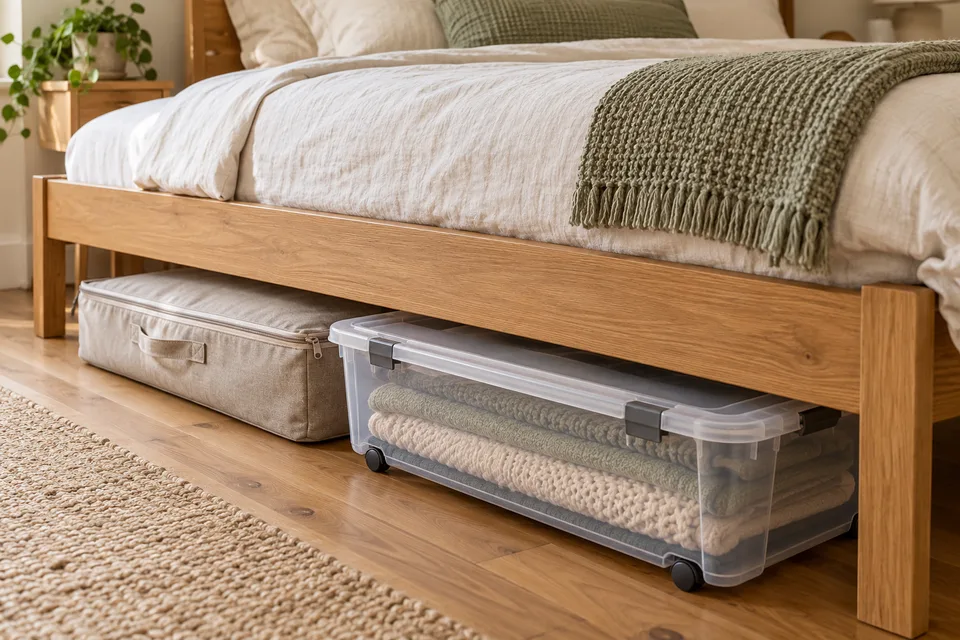
In a one-bedroom, the bedroom carries most of the storage load, so start there. A platform bed with built-in drawers ($300–600) or bed risers ($15) plus wheeled under-bed bins clears 25–30 cubic feet, enough for all off-season clothing and spare linens. Vacuum storage bags ($25–40 for a jumbo set) compress comforters and winter coats by about 75% before they go under. The nightstand should be a small dresser, not a table: same footprint, three drawers instead of zero.
The single closet has to work triple duty, so layer it: a double-hang rod (~$20) doubles short-hang capacity, shelf risers split the top shelf into two tiers, and a hanging 6-shelf organizer (~$15) converts one foot of rod into shoe and sweater storage. Door-back is free space. An over-door pocket organizer (~$20) holds accessories, or a mounted rack holds ironing board and vacuum attachments.
In the living area, choose one or two pieces that store and stop there: a storage ottoman (~$80), a lift-top coffee table ($150–300), or a media console with closed cabinets. Above-eye-level is the last frontier. A single floating shelf ($25–40) above the sofa or doorway holds books and baskets of rarely-used items. Skip freestanding shelving towers in small living rooms; they eat floor space and read as clutter faster than wall-mounted storage.