How do I organize a small home office with limited storage?
Updated:
Quick answer
One vertical filing solution above eye-line, one cable-management run, and one dedicated bin per recurring item type (paper, supplies, tech, receipts). The desk surface stays clear or the office stops working.
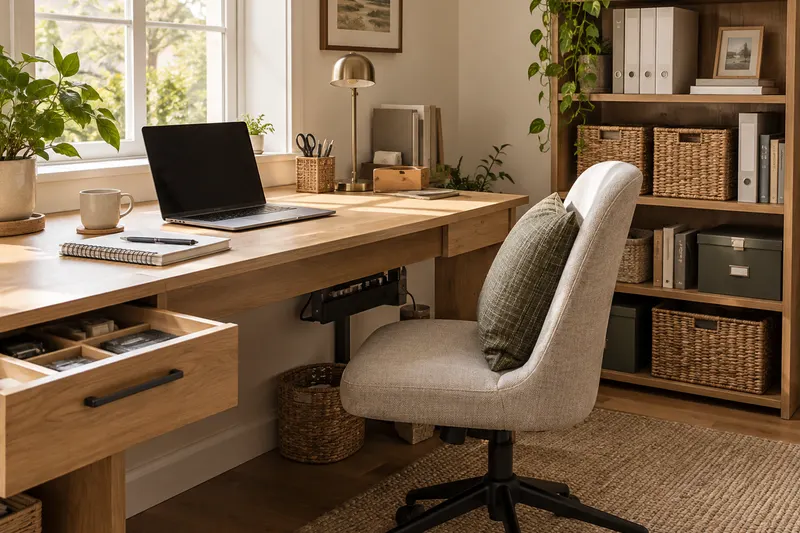
Small home offices fail when the desk becomes the storage. Move paper storage up: a vertical wall file or a 3-tier hanging organizer ($20–40) above the monitor handles incoming, active, and archive. Most paper doesn't need to live on the desk surface at all. A single under-desk drawer or rolling 3-drawer cart ($40–80) covers everything that does.
Cable management is half the visual battle. A single under-desk cable tray (~$25) plus 6–8 velcro cable ties consolidates the spaghetti. Add a desk-edge mount or charging dock for one device (phone, e-reader, headphones) to clear another surface. If you have a laptop, a vertical laptop stand (~$25) doubles as storage when the laptop is closed. A clamp-on monitor arm ($30–60) frees the single biggest block of desk real estate.
Bin everything else by category, not by frequency: one clear bin each for office supplies (pens, sticky notes), tech (cables, chargers, dongles), reference (manuals, warranty cards), and receipts. Clear bins so you don't dig. Add an over-door pocket organizer behind the office door for the bulk overflow. It converts the door into ~6 cubic feet of storage.