Disclosure: As an Amazon Associate, we earn from qualifying purchases. We may earn a commission when you buy through our partner links. It doesn't affect our recommendations or what you pay. Prices and availability change frequently; editorial ranges are planning estimates, not live quotes. Check the retailer for current prices, pack sizes, and availability. Learn more
How we choose: we don't buy or test these ourselves. We compare manufacturers' published specifications, retailer listings and, where they exist, hands-on reviews from other outlets, then match each pick to a space and a budget.
Food Storage Containers Side-by-Side
Tap a row's container type to jump straight to the full comparison.
Food Storage Container Comparison by Type
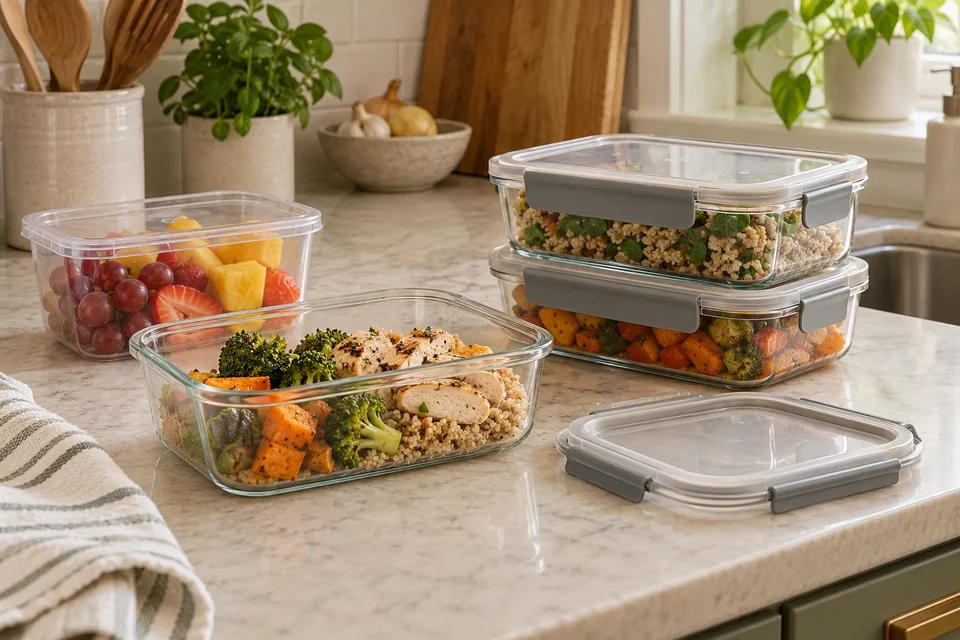
Tips for Choosing Food Storage Containers
- One brand, one lid system: mismatched lids are the whole problem — pick a line and build within it
- Square over round: square containers pack the fridge shelf ~25% tighter and stack without sliding
- Match material to job: glass for reheating and saucy food, plastic for transport, vented for produce
- Test the seal before trusting it: water inside, latch it, shake over the sink
- Buy fewer, larger sizes than you think: two big batch-cooking containers beat six tiny ones you never use
- Store lids on, nested by line: or use a lid organizer — the drawer of loose lids is a choice, not a fate
Best Food Storage Containers FAQ
What's the best food storage container overall?+
Pyrex Snapware Total Solution — durable glass bases with plastic lids that latch on all four sides. The maker rates the lids leakproof, and the glass doesn't take on tomato-sauce stains or hold a garlic smell after washing the way plastic can. Glass sets run roughly $30–60 for 8–12 pieces. If you want lighter and cheaper, Rubbermaid Brilliance is the plastic co-pick.
Glass or plastic for storing leftovers?+
Glass (Pyrex Snapware, Glasslock) doesn't stain, doesn't hold odors, and goes from fridge to microwave to dishwasher without degrading — the tradeoff is weight and breakability. Plastic (Rubbermaid Brilliance, made of clear Tritan) is light, 100% leakproof with its latching lids, and about half the price — but plastic can stain from tomato-based food and scratches over time. A practical kitchen runs glass for reheating and saucy leftovers, plastic for lunches that travel.
How are these different from pantry containers?+
Pantry containers (OXO POP, Vtopmart) are tall airtight canisters for decanting dry goods — flour, rice, cereal — and they live on a shelf. Food storage containers are shallow, leakproof, fridge-and-microwave-safe boxes for cooked food, leftovers, and meal prep. The seal requirements differ too: pantry containers keep air out for months; food containers must survive liquids, transport, and reheating. We cover pantry decanting in a separate guide.
Are plastic food containers microwave safe?+
Check the base: containers marked microwave-safe (Rubbermaid Brilliance, Snapware plastic) are tested for it, but vent the latch before reheating and expect staining from oily or tomato-based food over time. Glass is the safer long-term reheating surface — no staining, no warping, no debate about heat and plastic. Never microwave a vacuum-sealed or fully-latched container of any material.
How many food storage containers do I need?+
A 14–20 piece set (7–10 containers plus lids) covers a typical household: two large (8+ cups) for batch cooking, three or four medium (3–5 cups) for leftovers, and four or five small (1–2 cups) for portions and sauces. Buy one brand so lids interchange — mismatched containers are how the lid drawer becomes chaos. Rubbermaid Brilliance lids even interchange between its glass and plastic lines.
Do produce-saver containers actually work?+
The vented ones do more than plain boxes: Rubbermaid FreshWorks uses a membrane vent (FreshVent) and an elevated base to regulate moisture, and OXO GreenSaver adds a carbon filter for ethylene. Both are built to keep greens and berries off the condensation that wilts them in a store clamshell. They won't rescue already-old produce, and they're bulkier than plain containers — buy two or three for the produce you actually lose (berries, greens, herbs), not a full set.