Can AI organize a room from a photo?
Updated:
Quick answer
Yes. AI vision tools read a single photo of the space, identify what is causing the clutter, and generate a room-specific plan with product picks for each zone. It works best on defined spaces like garages, closets, and pantries, and gives you a shopping list and sequence, but you still do the physical work, and estimates are not measurements.
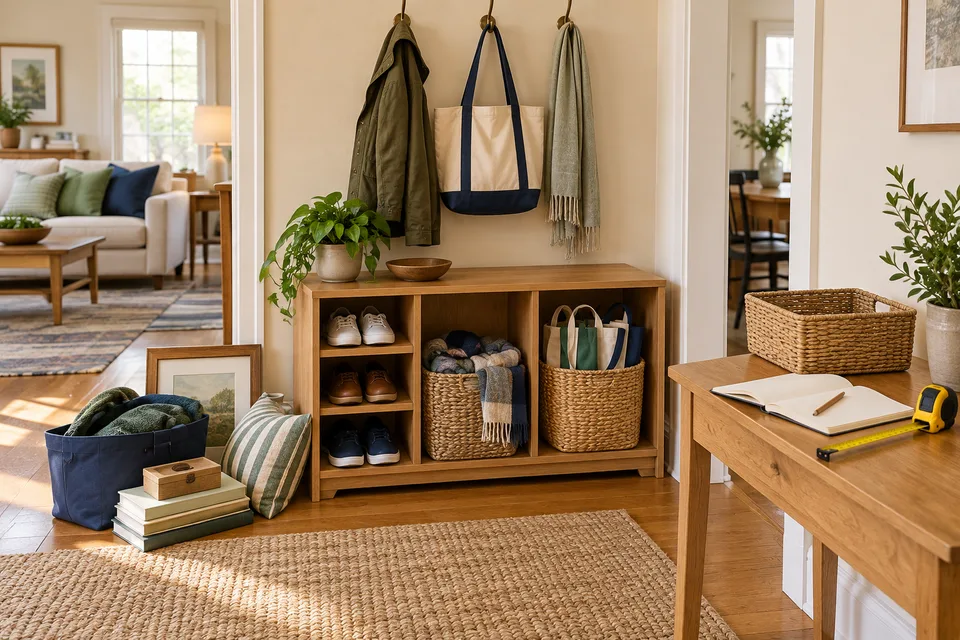
The mechanism is straightforward: you take one photo of the room, a vision model identifies the clutter zones, wasted vertical space, and mismatched storage, and it returns a plan. For a garage, that usually means spotting the floor pile and recommending a wall track system (Gladiator GearTrack, $150–300) for tools and sports gear, an overhead rack (FLEXIMOUNTS 4x8, $150–200) for seasonal bins, and steel shelving (Edsal MuscleRack, $80–200) along one wall. Free tools like homestorage.com do this from a photo with no signup; the output is a starting plan plus specific products, not generic advice.
What AI does well: it spots the vertical and overhead space people overlook, it matches a specific product to each problem instead of saying 'add storage,' and it gives someone who is paralyzed by a messy room a concrete first move. Where it is limited: it cannot move your belongings, it only sees what is in the frame (not the inside of cabinets or what is behind a door), and its size guidance is an estimate. Before you buy a closet system or a shelving unit, measure the actual linear feet and ceiling height yourself. Treat the plan as a shopping list and a sequence, not a blueprint.
You get the best result by giving the model a good photo: shoot the whole room in one frame, in daylight or with the lights on, with closet and cabinet doors open so the model can see the real storage. Defined, single-purpose rooms return the sharpest plans (garages, reach-in and walk-in closets, pantries, and home offices) because the clutter patterns are predictable. Open-plan living areas are harder because the model has to guess zones. Whatever the room, use the AI plan to decide what to buy and in what order, then do the sorting and installing the same way you would from any organizer's checklist.
Which AI tools do this?
Most AI room apps erase the mess from your photo rather than plan the fix. As of October 2026, the eight tools in RoomLab's own comparison (RoomLab, dehome.ai, REimagine Home, Virtual Staging AI, Gepetto AI, InstantDecoAI, Styldod and Clean My Room AI) all return a cleaned-up image, priced from about $5 a week to $43 a month or per image. Declutter: AI Cleaning Plan on iOS adds a before-and-after preview and step-by-step cleaning tasks with streaks, on a subscription ($24.99 a month or $99.99 a year).
None of them suggests what storage to buy or at what size. HomeStorage's analyzer is narrower in a different direction: it names the fixes in priority order, suggests one product per fix sized to what the photo shows, then renders a preview of the same room organized. It is free with no signup. It does not track chores, restyle decor or stage a room for sale; use the apps above for those.